
Solar battery lifespan matters because it affects long-term savings, home energy reliability, and the overall value of a solar installation. For UK homeowners, a well-chosen battery can store daytime solar generation for evening use, reduce reliance on the grid, and support better use of time-of-use tariffs. Most modern systems are built for years of regular cycling, but performance changes gradually rather than stopping suddenly. Capacity declines over time, and daily use patterns, charging behaviour, installation standards, and operating temperature all play a part in how long a battery remains useful. Understanding these factors helps owners make better decisions from the start, whether choosing a new system, reviewing warranties, or looking for practical ways to protect battery health and maintain dependable performance for longer.
How Long Does a Solar Battery Usually Last?
Average lifespan expectations for modern solar batteries
Most modern solar batteries used in UK homes last around 10 to 15 years under normal conditions, with lithium iron phosphate models often sitting at the stronger end of that range. Manufacturers typically support this with a warranty based on years, throughput, or retained capacity, often guaranteeing useful performance after thousands of charge and discharge cycles. That means a battery does not suddenly fail when the warranty ends; instead, it continues working with gradually reduced storage ability. A well-sized system that avoids constant deep discharge can stay effective for longer. For many households, the practical benchmark is how long the battery keeps enough capacity to cover evening demand and support meaningful savings on imported electricity.
Battery cycles, capacity loss, and performance changes over time
A solar battery ages mainly through cycling. One cycle represents using and recharging the equivalent of its full stored energy, even if that happens across several partial charges. Over time, repeated cycling causes capacity loss, so the battery stores less electricity than it did when new. Power delivery can also change gradually, especially if the system regularly operates at high loads or deep discharge levels. In practical terms, owners may notice the battery reaches empty sooner overnight or imports more grid electricity in winter. This is normal battery degradation rather than a sudden fault. Tracking retained capacity, round-trip efficiency, and charge behaviour helps homeowners judge whether the system is still performing well for daily household needs.
Key Factors That Influence Solar Battery Lifespan
Temperature, charging habits, and daily energy usage
Temperature has a major effect on solar battery lifespan. Batteries generally perform best within a controlled operating range, while repeated exposure to excessive heat speeds up chemical ageing and can reduce usable capacity sooner. Charging habits matter too. Frequent full charging, deep discharging, or rapid cycling under heavy household demand can increase wear over time. Daily energy use shapes how hard the battery has to work, particularly in homes with high evening consumption, electric heating, or regular appliance spikes. UK households benefit from matching battery size to real usage rather than forcing a smaller unit to cycle aggressively. A balanced setup helps preserve battery health while maintaining reliable evening and overnight energy availability.
Installation quality and smart energy management features
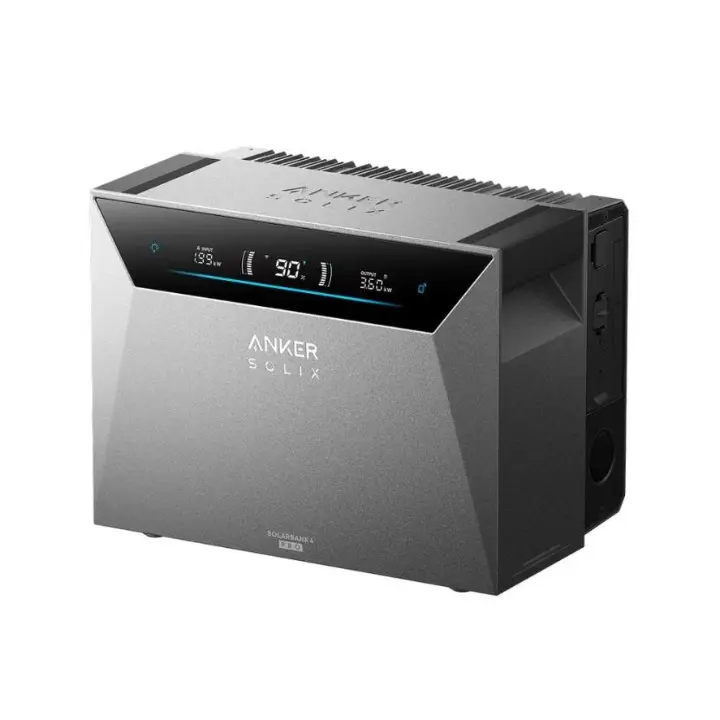
Installation quality strongly affects battery durability. Correct positioning, secure wiring, proper ventilation, and accurate system configuration all help reduce unnecessary strain and improve safe operation over the long term. Smart energy management can also make a measurable difference by controlling charge windows, protecting reserve levels, and reducing inefficient cycling. For example, the Solarbank 4 E5000 Pro combines plug-and-play simplicity with 2,500W bidirectional charging, 800W grid-tied output, and up to 5kWh base capacity expandable to 30kWh through five expansion batteries. It also supports up to 12 panels, 5,000W maximum MPPT capability, and compatibility with 870+ electricity suppliers including Octopus. Features like these can help households align charging and discharge more intelligently with tariff periods and usage.
Ways to Extend Your Solar Battery's Working Life
Maintenance tips for better battery efficiency
Good maintenance starts with regular system checks rather than constant manual intervention. Homeowners should review app data or monitoring portals for unusual drops in stored energy, charging delays, or repeated fault alerts. Keeping the battery area clean, dry, and well ventilated helps support safe, stable performance. It is also worth checking that firmware updates are installed when recommended, as these may improve charging logic and system protection. Avoid placing extra loads on circuits beyond the intended design, and ask a qualified installer to inspect the setup if performance changes suddenly. Simple habits such as preventing overheating, spotting irregular behaviour early, and following manufacturer guidance can improve battery efficiency and help protect long-term usable capacity.
Using smart controls and suitable storage solutions
Smart controls can significantly extend working life by reducing unnecessary stress on the battery. Setting charge and discharge limits, preserving a reserve level, and prioritising solar charging before cheap-grid top-ups can all improve long-term health. Time-of-use scheduling is especially useful in the UK, where off-peak tariffs can support lower-cost charging without forcing the battery into inefficient patterns. Suitable storage solutions also matter. A battery should be sized for realistic household demand so it can cover evening use without constant full-depth cycling. Expansion options are helpful when energy needs grow, since increasing storage is often better than overworking a smaller unit. When controls, sizing, and installation work together, owners usually see steadier performance and longer useful battery service.
Conclusion
Solar battery lifespan is not just about the number of years on a warranty. It reflects how well the system is sized, installed, used, and managed over time. For most UK homeowners, a modern battery should deliver around a decade or more of useful service, with gradual capacity loss rather than sudden failure. The best results come from controlling temperature, avoiding harsh charging patterns, using smart energy settings, and keeping an eye on system performance. Choosing storage that matches real household demand is equally important, especially for homes aiming to shift more solar energy into the evening. With the right setup and sensible maintenance, a solar battery can continue providing dependable backup, lower grid reliance, and worthwhile long-term energy savings.
Solar Battery Lifespan: What UK Owners Should Know