
CNC machining operations. It determines how precisely parts turn out, the speed of machining work, and how long your tools will last.
If you set it wrong, it leads to wasting your time, wearing out tools, and ending up with a finish that doesn’t look right. In the meantime, everything runs smoother and faster if you get it right.
This ProleanTech guide straightforwardly explains spindle speed. You’ll see
- Why it matters,
- How to calculate it
- How to pick the right speed for different jobs
What is Spindle Speed?
In simple terms, spindle speed is a machine variable. It describes the rate of rotation of the drive system of a CNC machine, usually expressed in revolutions per minute (RPM). In other words, it is the speed of rotation of your cutting tool/ workpiece during a cut. It's a critical adjustment, and if you set it wrong, the consequences can harm surface finish quality, the life of your tool, and the chip removal rate. On the other hand, when you dial it in right, it cuts well, the finish is clean, and your parts are accurate and repeatable.
How to Calculate the Spindle Speed?
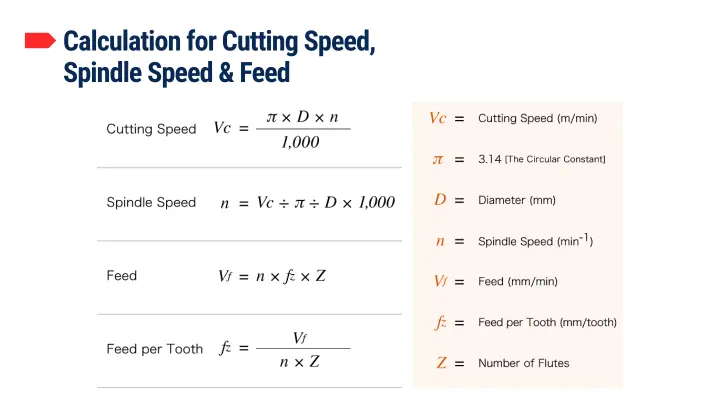
Before setting the spindle speed, you must decide on the cutting speed and the tool size. Cutting speed depends on the material you are machining, while tool size is simply the diameter of your cutter. The spindle speed formula for milling and the spindle speed formula for drilling are calculated differently. In general, spindle speed can be calculated.
The basic formula for spindle speed (N) is:
N = (1000 × V) ÷ (π × D)
Where:
- N = spindle speed in RPM
- V = cutting speed in meters per minute (m/min)
- D = tool diameter in millimeters (mm)
Here’s an Example Calculation
Let’s say you are cutting mild steel. The recommended cutting speed is about 30 m/min, and if your tool diameter is 20 mm, the calculation would be:
N = (1000 × 30) ÷ (π × 20)
N = 30,000 ÷ 62.83
N ≈ 478 RPM
So, for this setup, the spindle should run at about 480 RPM to achieve the right cutting conditions.
Spindle Speed vs.Cutting Speed: What’s Makes Them Different
Spindle Speed
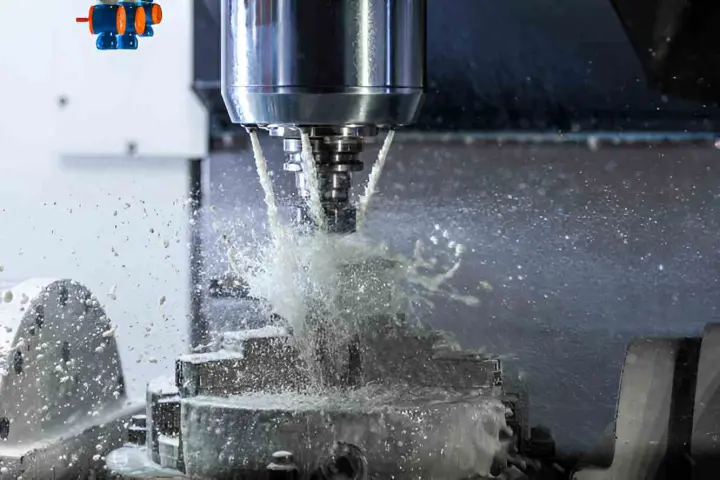
As mentioned before, spindle speed is the speed at which the tool or spindle rotates. Spindle speed units are expressed in revolutions per minute (RPM). It is predominantly adjusted based on the tool diameter and the machine capacity. Smaller tools must be run at high spindle speeds to cut, and larger tools must be run at lower speeds to prevent excessive heat and wear.
Cutting Speed
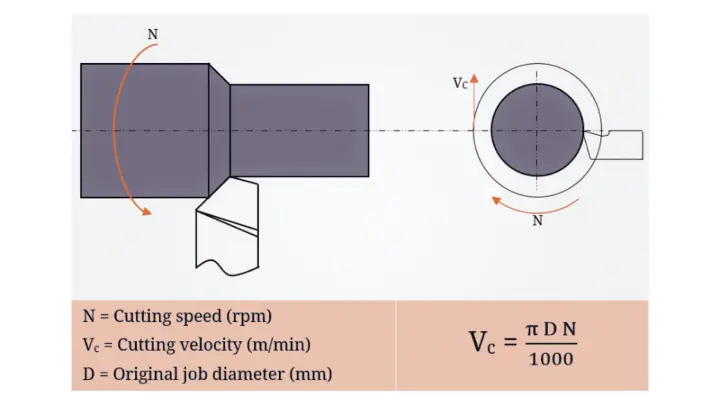
Cutting speed, on the other hand, defines the cutting edge's actual speed across the workpiece's surface. It is measured in meters/minute (m/min) or feet/minute (ft/min). The cutting speed varies, depending on the material in question that is being cut, the amount of heat generated by the actual cutting process, the use of coolant, and how much wear and tear one can accommodate in the tool.
Even though the two terms are closely interrelated, cutting speed is determined as a function of tool diameter and spindle speed. The incorrect values adjustment will result in poor surface finish, rapid tool wear, and even damage to the product. Once well adjusted, operating becomes smoother, tools last longer, and the final product is higher quality.
Considerations for Choosing the Right Spindle Speed
Selecting the correct spindle speed is not a matter of using one figure. It varies depending on the cutting material, the tool, and the kind of operation. When you do it correctly, you will have a longer tool life, better finish, and eliminate costly rework in the future. Here are the principal reasons.
Workpiece Material
Different materials respond to cutting in insignificantly distinct manner. Hard alloys such as titanium or stainless steel cannot accommodate high spindle speeds. When you push them too rapidly, you raise the temperature, wear out the tool, and possibly scar the surface.
Less complicated, easier-to-machine materials like aluminium can go much faster and produce a good finish. Machinists must consult and review the spindle speed chart according to material groups before starting a job.
Tool Material and Tool Geometry
The tool also determines your spindle speed. Carbide tools are more resistant to heat and pressure and are suitable when high-speed machining is applied. High-speed steel (HSS) ones, in turn, are more breakable and typically operate at medium speed.
Tool coatings like carbide tools with TiN or TiAlN coating have better resistance to friction and can be used at high speeds without overheating. Besides this, geometry is also essential: a narrower tool diameter would need more rotations to achieve the correct cutting conditions, whereas a wider tool would have to go slower.
Type of Operation
Machining jobs do not always need the same speed settings. When roughing, in which only a bulk amount of material is usually removed, intermediate spindle speeds are less risky to avoid overstressing the tool. The finishing operations generally require smooth surfaces, so faster spindle speeds are applied.
Some processes are more sensitive than others. Such straightforward operations as facing or pocketing can be run faster. However, sensitive reaming, drilling, or plunging methods need lower speeds to attain precision and control.
Advanced Spindle Speed Methods
Spindle speed does not remain a value, like being selected once and forgotten. The parts, tooling, and setups on the shop floor can apparently change; no single setting can always work. You must know how to vary speed to make the tool cut well, stay sharp, and not burn up time. Here are the more advanced spindle speed methods.
VSS (Variable Spindle Speed)
Constant RPM is perfect for simple jobs, but once you start to cut complex shapes or mixed materials, it becomes a problem. The instrument could be too sharp somewhere and superficial. Varying spindle speed rectifies that. Rather than keep RPM locked in, you allow it to increase or decrease with the cut.
Most new CNCs and CAM programs automatically deal with this issue. Their reading tool load or geometry changes, and the speed is shifted on-the-fly.
High-Speed Machining

High-speed machining does not just imply setting the dial as high as possible. At speeds of 15,000 RPM or higher, the machine, spindle, and tool must remain stable. Small-diameter end mills require very high RPM to maintain the correct cutting speed. Running them too slowly causes rubbing and premature tool wear, while running them too fast can cause overheating and tool failure.
Chatter Control
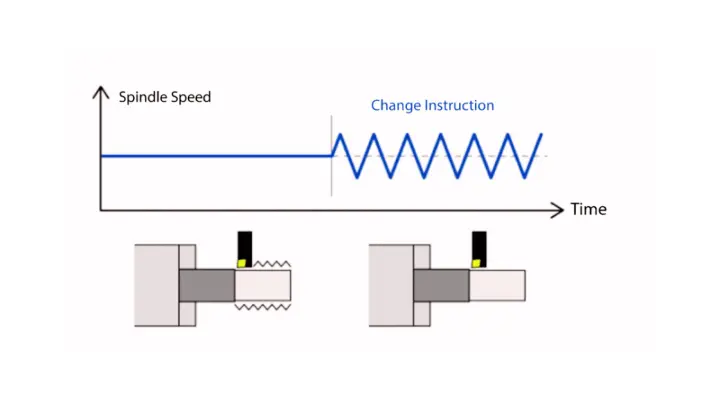
Chatter is the unpleasant noise that machinists hate. It causes squealing, vibration, and a poor surface finish. One easy way around is to adjust the spindle speed slightly to put the vibration out of time. It saves the tool and saves the part from scraping. This trick is employed at the bottom of a deep boring or thin-wall cut, where stability is always at risk.
Conclusion
In machining operations, spindle speed is a setting, and it defines the type of interaction between the tool and the material, the finish quality, and also dictates the tool life. Correct RPM will help you save time, improve machining accuracy, and prevent expensive errors.
This article has covered almost everything from basic formulas to advanced methods like variable spindle speeds and chatter control. Spindle speed touches every part of the machining process. You must be familiar with how to set and adjust it, which gives you better parts, longer tool life, and more consistent results on the shop floor.
Spindle Speed Chart & Feed Rate: Choosing the Right RPM